


News
APSI Targets Global Space Market with Jeju Satellite Hub
April 6, 2026
[APSI Establishes Satellite Manufacturing and Ground Station Integration in Jeju, Targeting the Global Space Market]
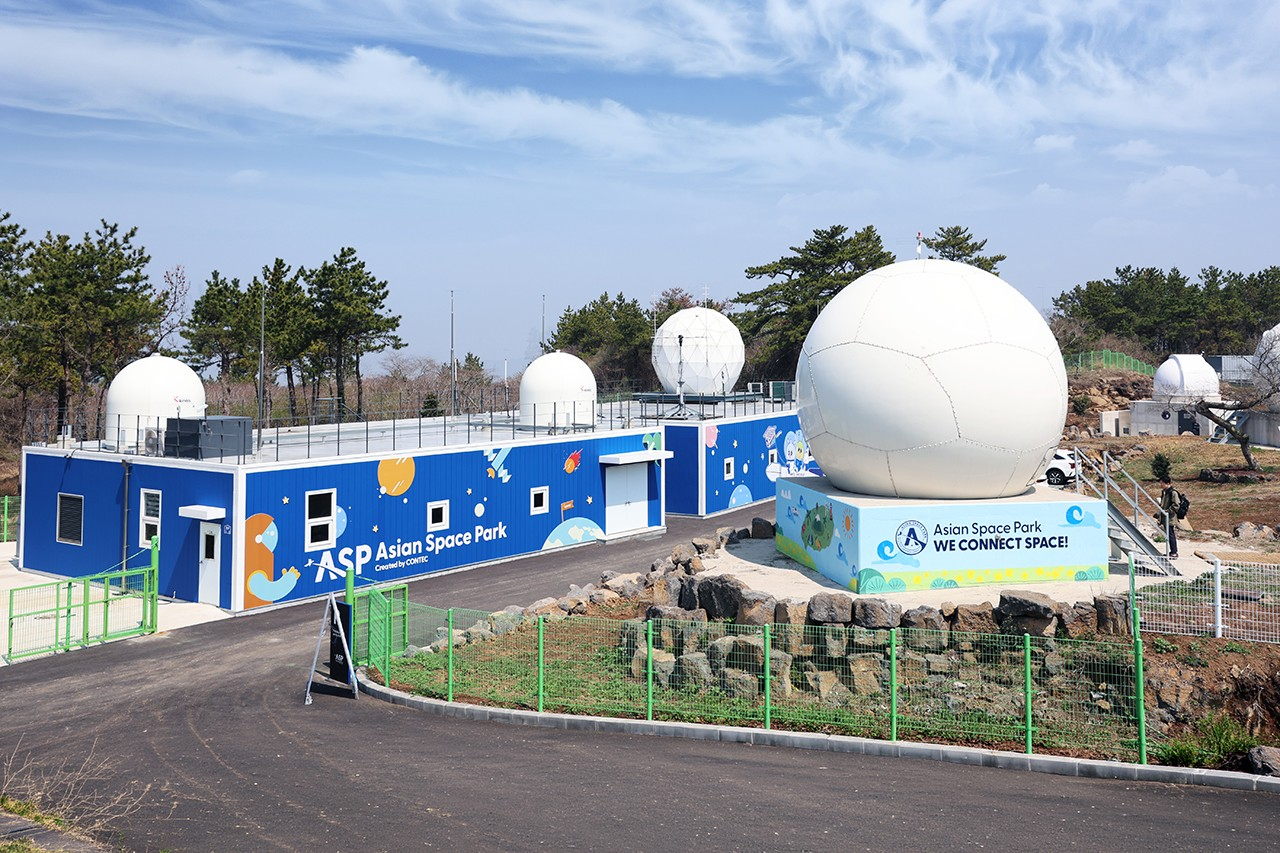
Satellite systems and communications terminal company APSI unveiled its space business strategy through the opening of the Jeju Asian Space Park (ASP) and participation in the CONTEC Space Leader Global Meetup Day. The company aims to expand its business through a space industry value chain that integrates satellite manufacturing with ground station infrastructure.
By leveraging a system that links its Assembly, Integration and Test (AIT) Center with Jeju-based ground station infrastructure, APSI plans to expand its presence in the satellite market, secure more space project contracts, and strengthen collaboration with international space companies.
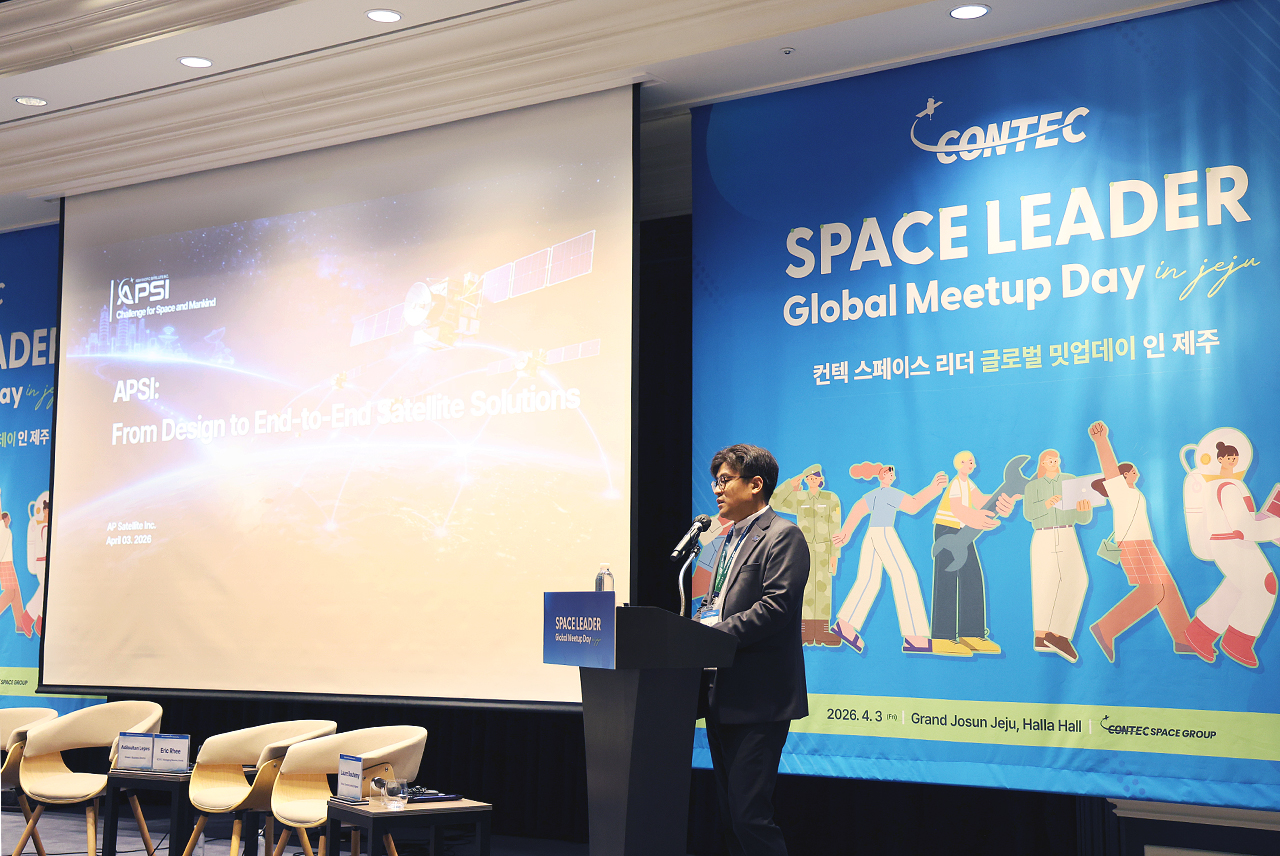
APSI participated in the ASP opening ceremony held in Hallim-eup, Jeju City on April 2 and the Meetup Day event held at the Grand Josun Jeju Hotel on April 3, where it introduced the Group’s space business capabilities. ASP is Korea’s first privately operated ground station complex, equipped with 12 low Earth orbit (LEO) satellite receiving antennas and ground stations operated by global partners. APSI plans to enhance its competitiveness in winning contracts by combining this infrastructure with its proprietary satellite manufacturing technologies.
The second day of the event featured Meetup Day, attended by Tae-seok Oh, Administrator of the Korea AeroSpace Administration (KASA), and Seong-ah Choi, Vice Mayor for Political Affairs, Economy and Science of Daejeon Metropolitan City. In their congratulatory remarks, they encouraged domestic and international space companies leading the New Space era and emphasized the importance of national-level support and intergovernmental cooperation. Against this backdrop of strong public-sector interest, the event served as a platform for practical technology exchanges and business collaboration with global space companies, including ICEYE (Finland), Kinéis (France), and Viasat (United States).
As a speaker in the event’s key “Space Segment” session, Jin-hwan Song, Executive Vice President and Head of the Satellite Business Division at APSI, presented the company’s core technological capabilities, highlighting its ability to independently design and manufacture both satellite payload electronics and satellite bus systems. He emphasized APSI’s competitiveness in the commercial satellite market, built on technologies proven through national space development programs, and showcased the company’s potential for expanding partnerships with global industry players.
APSI also highlighted the one-stop service capabilities of its AIT (Assembly, Integration & Test) Center, which is scheduled to commence full-scale operations in the first half of the year. The AIT Center serves as a key facility where all stages of satellite development—from assembly and integration to precision testing and final verification—are conducted under one roof. By combining the manufacturing capabilities of the AIT Center with the ground station infrastructure of Jeju ASP, APSI aims to establish a distinct competitive advantage in securing contracts for commercial satellite programs and future national space projects.
These efforts align with APSI’s recent achievements, including its selection as the lead organization for the payload of Space Verification Satellite-3, which is scheduled to be launched aboard the sixth Nuri launch vehicle mission. As a key partner in national strategic space programs, APSI is expected to strengthen its position in the global New Space market through its proprietary technologies and advanced infrastructure.
Through the opening of Jeju ASP and participation in Meetup Day, APSI demonstrated significant opportunities for expanding cooperation with global space companies. Moving forward, the company plans to further strengthen its position within Korea’s space industry while accelerating its expansion into the global New Space market through continued technological advancement and infrastructure development.
하단영역

Copyright © APSI. All Rights Reserved. Flr. 9, Unit 2, 98, Gasan digital 2-ro, Geumcheon-gu, Seoul, Republic of Korea
TEL : 02-2026-7777 FAX : 02-2026-7772 E-mail : question@apsi.co.kr
Copyright © APSI. All Rights Reserved.